

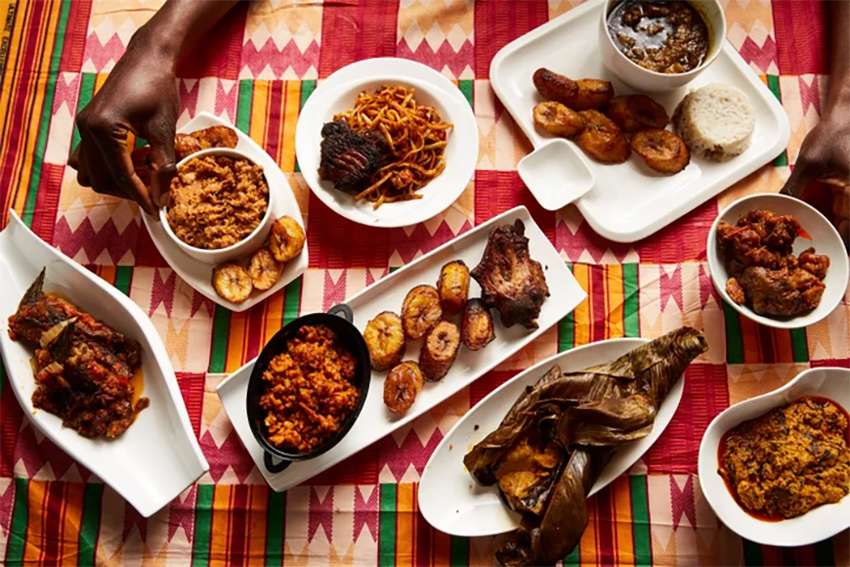
Photo Credit: Getty Images
Nigerian cuisine is much more than a collection of popular dishes. Across the country, food reflects ethnic identity, geography, history, hospitality and family traditions, creating one of West Africa's most diverse culinary landscapes.
From the smoky aroma of suya sold by roadside vendors to steaming plates of jollof rice served at celebrations, Nigerian food is often bold, heavily seasoned and designed to be shared.
The Federal Ministry of Arts, Culture and the Creative Economy describes Nigerian culinary practice as being as diverse as the country's ethnic groups. Traditional foods recognised as part of the country's culinary heritage include fufu, tuwo, akpu, suya, kilishi, amala, eba, pounded yam, egusi and several regional soups.
One of the country's most recognisable dishes is jollof rice. The rice is cooked in a seasoned tomato and pepper base and can be prepared with different combinations of spices, vegetables and protein.
Jollof is particularly associated with celebrations, parties and large gatherings, where the preparation of a large pot can become part of the occasion itself. Its popularity has also fuelled the well known friendly rivalry between Nigerians and Ghanaians over whose version of jollof is better.
But Nigerian cuisine extends far beyond the famous rice dish.
Egusi soup, made using ground melon seeds, is another widely recognised favourite. It is commonly eaten with a variety of starchy foods and can contain vegetables, meat or fish.
Then there is pounded yam, traditionally prepared by boiling yam before pounding it until it becomes smooth and stretchy. It is commonly served alongside soups such as egusi and other vegetable based preparations.
These soft staples are part of what Nigerians commonly call "swallow" foods. They include pounded yam, eba, fufu and amala. Research on the Nigerian diet describes these foods as pounded or processed grains and starchy vegetables that are formed into portions and eaten together with soups or sauces.
For street food lovers, suya occupies a special place.
The spicy grilled meat is associated particularly with northern Nigerian culinary traditions and is prepared with a spice mixture commonly known as yaji. It is usually served with sliced onions, tomatoes and other accompaniments.
Northern Nigeria also has foods such as tuwo, kilishi and fura da nunu, while southern regions offer an extensive selection of vegetable, seafood and palm oil based dishes. The National Institute for Cultural Orientation documents distinctive cuisines across Nigeria's six geopolitical zones, showing just how dramatically food traditions can change from one part of the country to another.
Snacks are equally important. Akara, moi moi, puff puff, boli and roasted or boiled corn are among foods enjoyed across different parts of the country.
Perhaps the most striking feature of Nigerian food culture is its connection to hospitality. Nigeria's Federal Ministry of Arts, Culture and the Creative Economy notes the importance of generous feeding when welcoming guests.
A Nigerian meal can therefore be more than something placed on a plate. It can be an expression of where someone comes from, what their family taught them and how they welcome other people.
From elaborate celebration dishes to late night street food, Nigerian cuisine continues to carry culture from one generation to another while gaining an increasingly visible audience beyond the country's borders.