

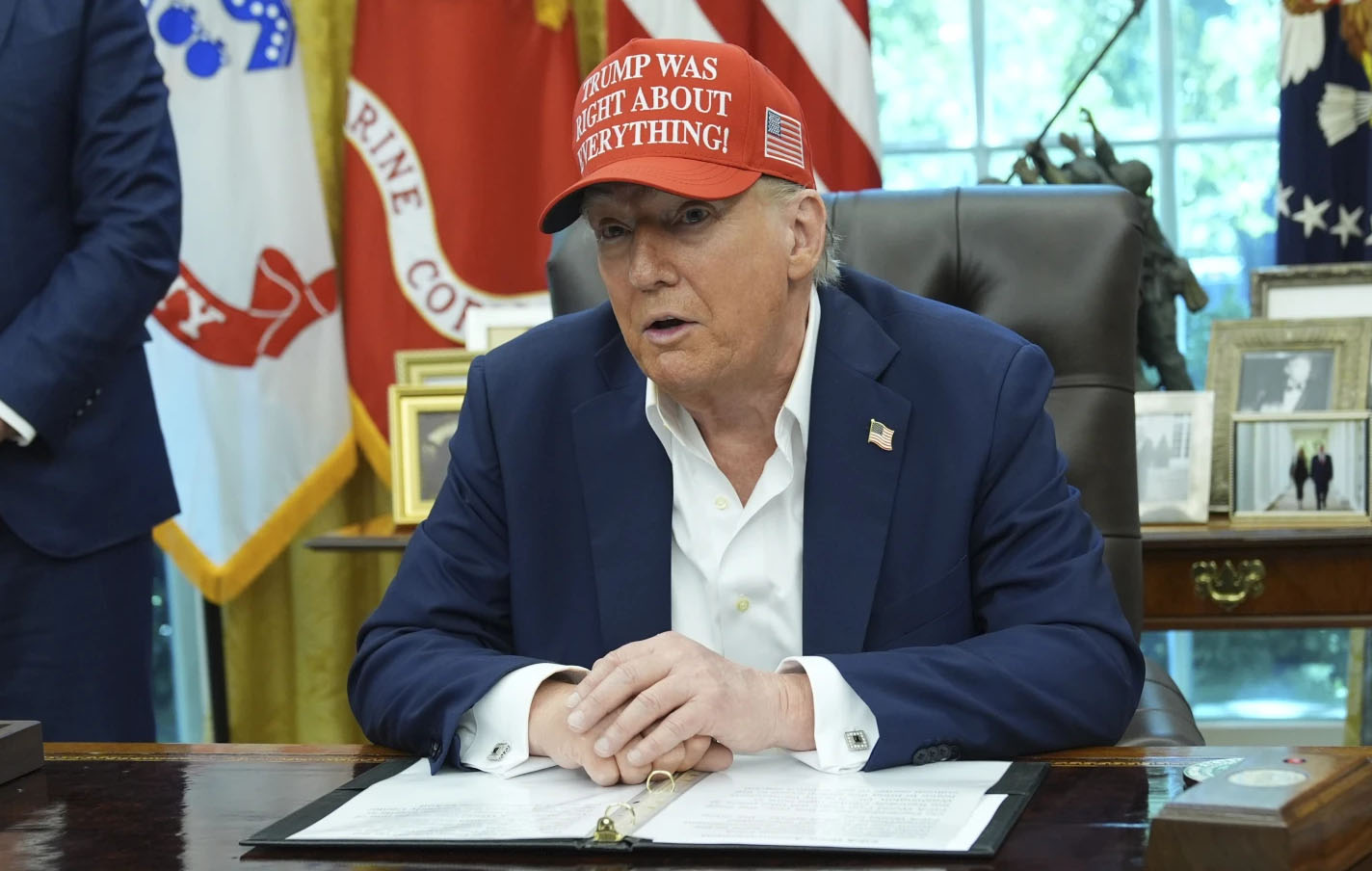
Photo Credit: Getty Images
President Donald Trump has said he is legally entitled to pardon himself and suggested he may grant clemency to members of his administration, arguing he does not want his staff to face prolonged legal battles.
Trump made the remarks during an interview with Newsmax host Rob Finnerty on Thursday, October 15, when asked whether he was seriously considering a self-pardon before leaving office.
"Well, I don't think about it because I did nothing wrong," Trump said. He added that he could have pardoned himself before leaving office in January 2021 but chose not to.
"I could have given myself a pardon the last time I left office. I never thought that they'd bring me through the mud," he said.
Asked whether he regretted that decision, Trump replied, "Well, I won, but I won the hard way."
He subsequently asserted his authority to issue a self-pardon, saying, "I'm allowed to do a self-pardon. I'm allowed to pardon. ... The pardon is very powerful. I know that. They say it's the most powerful thing a president has, the power of pardon."
However, whether a sitting president can legally pardon himself remains unresolved. No president has attempted a self-pardon that was subsequently tested in court.
Trump also expressed concern about potential legal challenges facing members of his administration, suggesting he was prepared to use his presidential pardon power on their behalf. "I don't want to see people that work for me go through years of nonsense, hire lawyers and everything else, all for nothing," he said.
His comments followed an October 1 interview with Time magazine in which he also indicated he was prepared to pardon members of his administration. When asked on Friday, October 16, whether Trump intended to pardon himself or his staff, a White House spokesperson referred PEOPLE to his Newsmax interview.
Trump's remarks come amid scrutiny of his administration's use of presidential powers and the handling of criminal investigations involving political figures.
Before returning to the White House in January 2025, Trump faced federal cases concerning his handling of classified documents and alleged efforts to overturn the 2020 presidential election results. Both cases were dismissed following his re-election, in keeping with longstanding Justice Department policy against prosecuting a sitting president and developments in the respective cases.
Trump has previously exercised his pardon authority to grant clemency to several individuals, including Charles Kushner, the father of his son-in-law Jared Kushner, during his first term.