

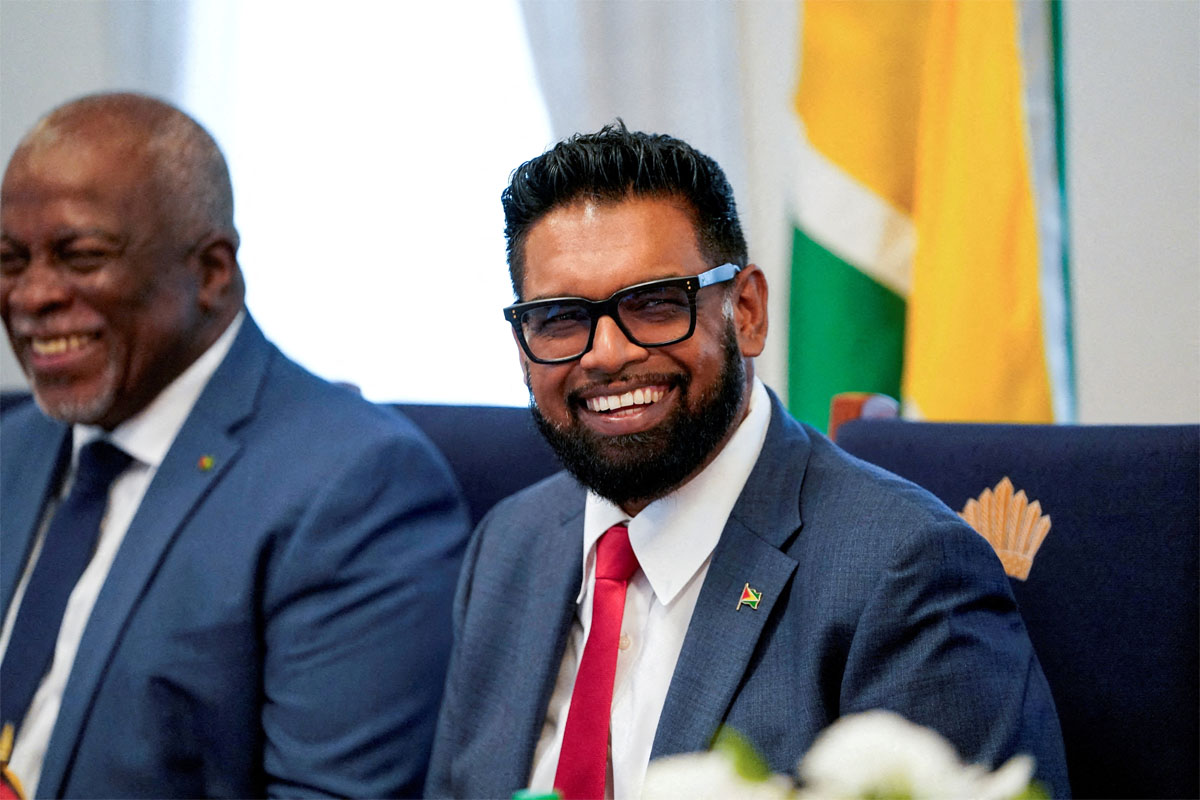
Photo Credit:Reuters
Irfaan Ali was officially sworn in on Sunday for a second term as president of Guyana, reinforcing his leadership of the oil-rich South American nation. Backed by the ruling People’s Progressive Party/Civic, Ali secured 36 parliamentary seats in the September 1 election, strengthening his majority by three compared to the last term.
Since taking office in 2020, Ali has overseen the transformation of Guyana’s economy through the management of newly discovered oil reserves. Revenues have been channeled into infrastructure projects, including roads, schools, and hospitals, while university tuition has been made free under his administration. His victory speech promised continued growth, with an emphasis on diversifying the economy beyond oil to ensure long-term prosperity.
Ali pledged not only to expand production but also to renegotiate agreements to guarantee broader benefits for the Guyanese people. “We will press forward with new exploration on a stronger production sharing agreement, ensuring that the wealth is truly for the people,” he declared during his swearing-in ceremony.
The opposition parties, including We Invest in Nationhood and A Partnership for National Unity, claimed a combined 28 seats, but none came close to challenging the PPP/C’s dominance. Analysts credit Ali’s popularity to his focus on social programs and his pragmatic use of oil revenues, which have raised incomes and improved public services.
International observers continue to monitor Guyana’s rapid growth, with concerns that heavy reliance on oil could create economic vulnerabilities. Ali’s challenge will be balancing expansion with sustainability, ensuring that new industries emerge alongside the petroleum sector. With rising regional influence and a population eager for opportunity, Guyana enters Ali’s second term at a critical crossroads, poised between remarkable wealth and the responsibility of equitable development.