

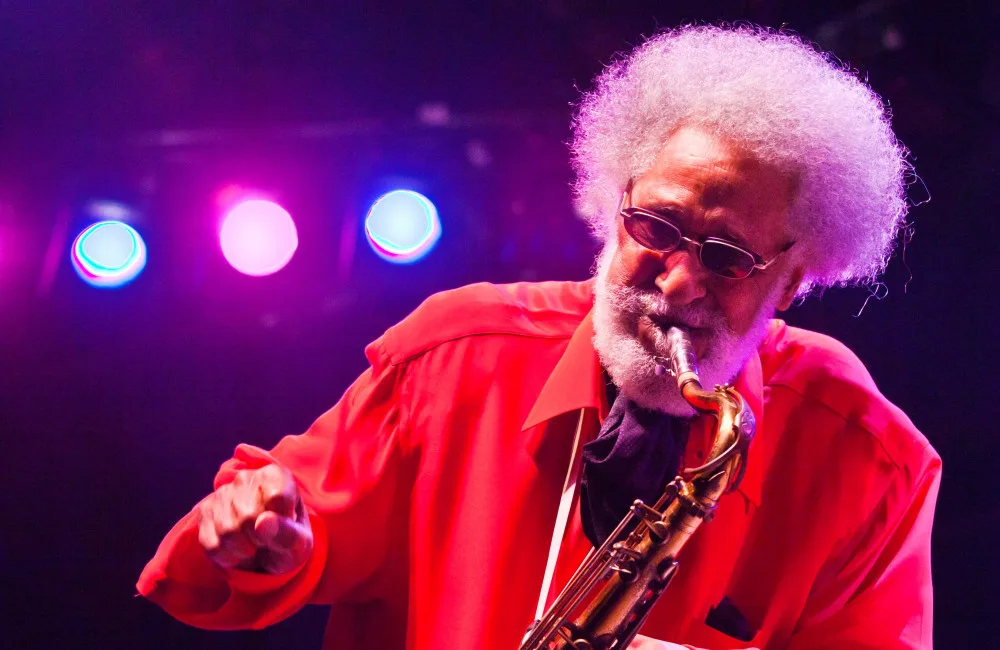
Photo Credit: Getty Images
Sonny Rollins, the legendary tenor saxophonist widely regarded as one of the greatest improvisers in jazz history, has died at the age of 95.
Rollins died on May 25 at his home in Woodstock, New York, according to a statement released by his family and publicist. The statement described him as "one of the most honored and influential figures in American music of the 20th century and beyond."
Born Walter Theodore Rollins in Harlem in 1930 to parents from the Virgin Islands, the musician developed a love for jazz at an early age. Although he first learned piano and alto saxophone, he later switched to tenor saxophone after becoming inspired by jazz great Coleman Hawkins.
"I was attracted, I think, to his sound," Rollins once said of Hawkins. "It just seemed like he knew so much music."
By the time he was still a teenager, Rollins had already begun performing with influential jazz artists including Miles Davis, Thelonious Monk and Bud Powell. He later described Monk as his "musical guru."
Rollins became one of the defining figures of modern jazz during the 1950s and 1960s, releasing landmark albums including Saxophone Colossus, Way Out West and The Bridge. His compositions "St. Thomas" and "Oleo" became jazz standards, while his improvisational style earned admiration across generations of musicians.
Branford Marsalis once described Rollins as "the greatest improviser in the history of jazz" alongside Louis Armstrong.
Despite his success, Rollins also faced personal struggles. During the 1950s, he battled heroin addiction and was arrested several times before eventually entering rehabilitation at a federal treatment facility in Kentucky.
After getting sober, he rebuilt his career and entered one of the most productive periods of his life, releasing numerous acclaimed records within just a few years.
Known for constantly pushing himself artistically, Rollins famously took a break from performing in the late 1950s to practice for hours every day on New York's Williamsburg Bridge, later inspiring his 1962 album The Bridge.
In later years, he spoke openly about spirituality, aging and mortality. A quote shared by his family following his death read: "I think when the creative person ends, he continues in the next existence. I'm a person who believes this life isn't the be-all and end-all of everything."
Rollins retired from performing in 2014 after developing pulmonary fibrosis, though he remained deeply reflective about music and life.
"Rather than being depressed I should be grateful," he said in a later interview. "I had an opportunity to live a life as a musician, which I always wanted to do."
Over the course of his career, Rollins received multiple Grammy Awards, a Grammy Lifetime Achievement Award, the National Medal of the Arts and a Kennedy Center Honor, leaving behind a legacy that transformed jazz music around the world.