

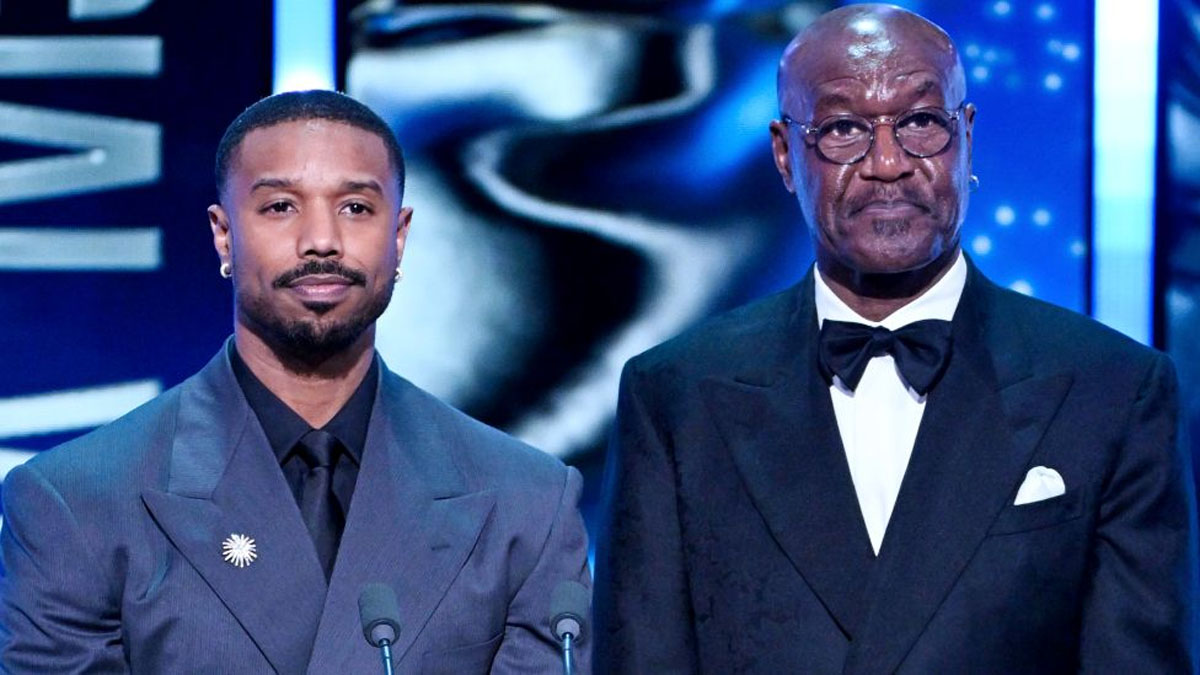
 Photo Credit:Getty Image
The British Broadcasting Corporation (BBC) and the British Academy of Film and Television Arts (BAFTA) have issued formal apologies following the broadcast of a racial slur during the 79 th BAFTA Film Awards on February 22, 2026. The incident occurred as stars Michael B. Jordan and Delroy Lindo were on stage at London’s Royal Festival Hall to present the award for Best Visual Effects.
The offensive language was shouted by an audience member, identified as Tourette syndrome advocate John Davidson. Davidson, who inspired the BAFTA-nominated film I Swear, suffers from severe coprolalia—a rare symptom of Tourette syndrome that involves the involuntary utterance of socially taboo or offensive language. During the presentation by Jordan and Lindo, who were promoting their film Sinners, Davidson involuntarily shouted the N-word.
The BBC faced immediate backlash because the ceremony was aired on a two-hour delay, which typically provides ample time for editors to bleep or remove offensive content. Despite this, the slur was included in the primary broadcast and remained available on the BBC iPlayer streaming service until the program was pulled for re- editing on Monday morning. BBC producers reportedly claimed they “did not hear” the slur while working in the production truck, despite successfully editing out other profanities from the night.
In a statement, a BBC spokesperson apologized for the oversight: “Some viewers may have heard strong and offensive language during the BAFTA Film Awards. This arose from involuntary verbal tics associated with Tourette syndrome, and as explained during the ceremony, it was not intentional. We apologize that this was not edited out prior to broadcast.”
BAFTA also issued a direct apology to Michael B. Jordan and Delroy Lindo, praising their “incredible dignity and professionalism” in the face of the outburst. John Davidson himself expressed that he was “deeply mortified” by the incident, clarifying that the tics are in no way a reflection of his personal beliefs or intent.
However, the response has drawn criticism from high-profile figures in the industry. Actors Wendell Pierce and Jamie Foxx, along with journalist Jemele Hill, argued that the initial apologies focused too heavily on the medical explanation rather than the trauma inflicted on the two Black actors. The incident has reignited debates regarding the efficacy of delayed broadcasts and the balance between disability inclusion and the protection of guests from racial harm.