

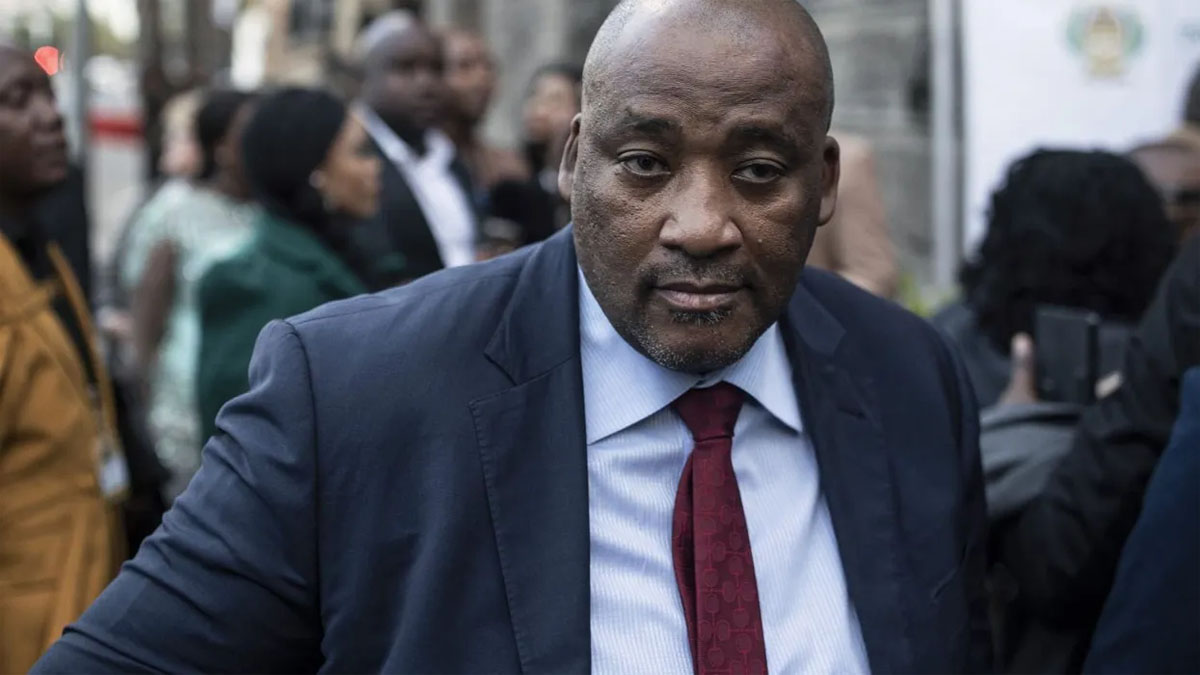
Photo Credit:Per-Anders Pettersson/Getty Images
South Africa’s Minister of Sports, Arts, and Culture Gayton McKenzie is once again at the center of heated national debate, this time over resurfaced social media posts that have led to accusations of racism. The politician, who has built his career on blunt rhetoric and passionate defense of the country’s coloured community, now faces the prospect of sanction from the South African Human Rights Commission (SAHRC).
The controversy stems from posts made more than a decade ago in which McKenzie used a deeply offensive racial slur directed at Black people. While McKenzie has acknowledged regret, he has also defended his identity, explaining that as the son of a black mother and of mixed heritage, he has always considered himself both black and coloured. This self-identification, he argued, places him within the group he referenced.
Nevertheless, the remarks have caused widespread anger, particularly because the “K-word” is among the most dehumanizing slurs from South Africa’s apartheid past. The SAHRC has given McKenzie until the end of the week to delete the offensive posts, issue a public apology, and consider steps toward redress.
McKenzie’s political rise has been closely tied to the Patriotic Alliance (PA), a party with strong support among coloured South Africans. For many, he represents a long-overlooked voice, especially given their historical marginalization both under apartheid and in the decades that followed democracy. His inclusion in President Cyril Ramaphosa’s coalition government was seen as a calculated move to broaden representation.
The minister’s latest controversy highlights the fragility of South Africa’s ongoing struggle with race relations. Experts have noted that racial identity remains deeply embedded in the structures of society, from housing and education to employment. The storm around McKenzie, therefore, is not just about words from the past but about broader frustrations regarding inequality and identity in modern South Africa.
Critics argue that his position as a minister responsible for cultural unity makes the remarks especially troubling. Yet McKenzie continues to stand firm, claiming his history as part of the anti-apartheid struggle proves his commitment to racial solidarity. The SAHRC’s next steps will determine whether his defense holds weight politically, and whether President Ramaphosa chooses to stand by him.
Nevertheless, the remarks have caused widespread anger, particularly because the “K-word” is among the most dehumanizing slurs from South Africa’s apartheid past. The SAHRC has given McKenzie until the end of the week to delete the offensive posts, issue a public apology, and consider steps toward redress.
McKenzie’s political rise has been closely tied to the Patriotic Alliance (PA), a party with strong support among coloured South Africans. For many, he represents a long-overlooked voice, especially given their historical marginalization both under apartheid and in the decades that followed democracy. His inclusion in President Cyril Ramaphosa’s coalition government was seen as a calculated move to broaden representation.
The minister’s latest controversy highlights the fragility of South Africa’s ongoing struggle with race relations. Experts have noted that racial identity remains deeply embedded in the structures of society, from housing and education to employment. The storm around McKenzie, therefore, is not just about words from the past but about broader frustrations regarding inequality and identity in modern South Africa.
Critics argue that his position as a minister responsible for cultural unity makes the remarks especially troubling. Yet McKenzie continues to stand firm, claiming his history as part of the anti-apartheid struggle proves his commitment to racial solidarity. The SAHRC’s next steps will determine whether his defense holds weight politically, and whether President Ramaphosa chooses to stand by him.