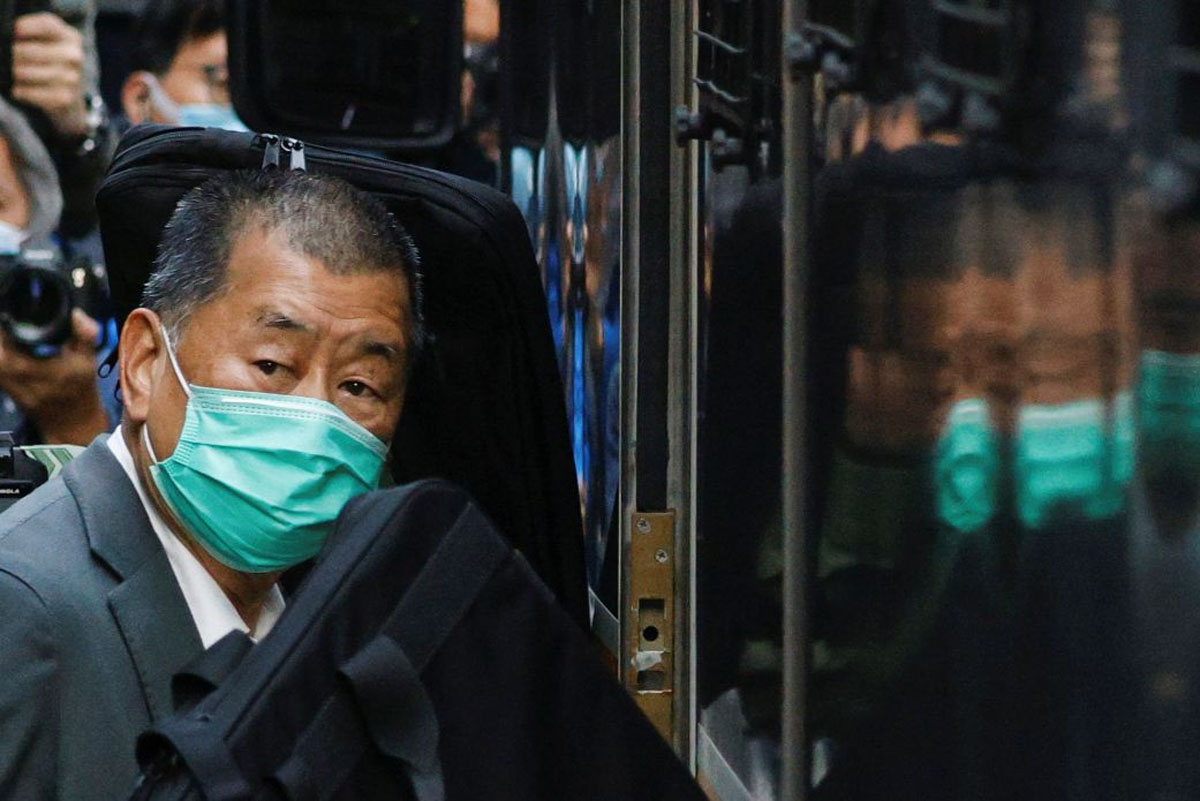
 Photo Credit:Tyrone Siu/Reuters
A Hong Kong court has sentenced pro democracy media tycoon and British citizen Jimmy Lai to 20 years in prison, the harshest punishment yet under the city’s controversial national security law. The ruling, delivered on 9 February 2026, has triggered strong reactions from the United Kingdom, Europe, the United States and human rights groups, while being firmly defended by Beijing and Hong Kong authorities.
Lai, 78, was found guilty last December of national security offences including sedition and colluding with foreign forces. On Monday, judges described his actions as grave and premeditated, concluding that his activities posed a serious threat to national security. The court said the lengthy sentence reflected the scale and intent of the offences.
The sentence marks a significant moment in Hong Kong’s political history. It is the most severe punishment handed down since China imposed the national security law in 2020, a law Beijing says is essential for restoring stability after years of unrest. Critics argue the legislation has been used to silence dissent and dismantle freedoms once guaranteed under the one country two systems framework.
Jimmy Lai is the founder of the now defunct pro democracy newspaper Apple Daily, which authorities shut down in 2021. For years, Lai was one of Beijing’s most outspoken critics and used his newspaper to support protest movements and democratic reform. Supporters hail him as a symbol of resistance and free expression, while the Chinese government and Hong Kong leadership portray him as a traitor who endangered the city.
Six former executives of Apple Daily were also sentenced on Monday, receiving prison terms ranging from six years and nine months to ten years. Hong Kong’s chief executive John Lee welcomed the verdict, accusing Lai of using Apple Daily to poison the minds of citizens, incite hatred and seek foreign sanctions against China and Hong Kong.
Outside the courthouse, a heavy police presence was in place as supporters gathered, some having queued overnight since Friday evening. The atmosphere
reflected the deep divisions surrounding Lai’s case. While many in the pro democracy movement view him as a hero, Beijing maintains that the trial was fair and the punishment justified.
Lai’s son, Sebastien Lai, described the sentence as basically a death sentence given his father’s age and deteriorating health. He told the BBC that Lai has heart problems and has lost significant weight during his detention, adding that even a much shorter sentence would have been devastating.
The UK government has condemned the ruling. Foreign Secretary Yvette Cooper called the prosecution politically motivated and said Britain would rapidly engage further with Beijing. She stressed that for a 78 year old man, a 20 year sentence amounts to a life term and urged Hong Kong authorities to release him on humanitarian grounds so he can be reunited with his family.
In response, China’s foreign ministry said the sentencing was reasonable legitimate and legal, warning other countries not to interfere in China’s internal affairs. Despite international pressure, Beijing has shown no sign of backing down.
Human rights and media organisations have strongly criticised the verdict. Amnesty International called it a grim milestone for Hong Kong, saying it represents a cold blooded attack on freedom of expression and a clear sign of the city’s transformation from a rule of law society to one ruled by fear.
As reactions continue to unfold, Jimmy Lai’s case has become a powerful symbol of the broader struggle over Hong Kong’s future, its freedoms and its relationship with the rest of the world.
