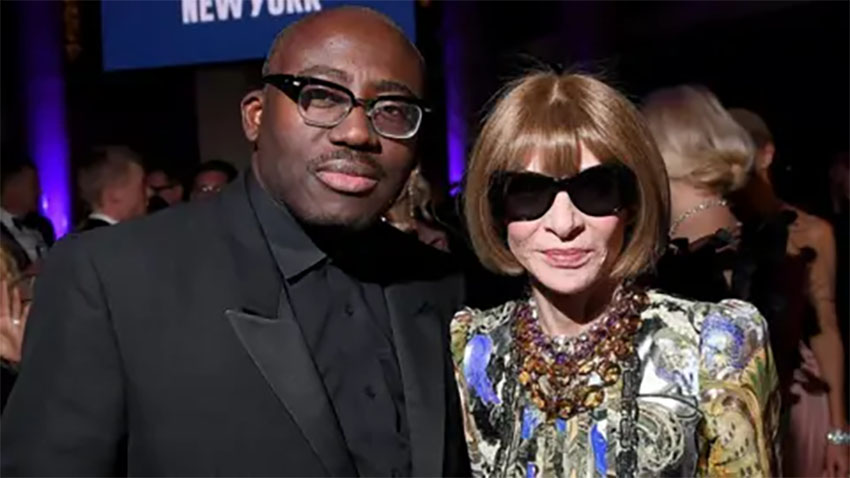
Photo Credit: Getty Images
Edward Enninful's farewell to British Vogue in March 2024 was more than just a cover—it was a cultural moment. His final issue brought together 40 of the world's most influential women, from Oprah Winfrey and Serena Williams to Naomi Campbell and Jane Fonda. The sight of these icons side by side was a feat of coordination and persuasion that only a few editors could accomplish. It was a fitting finale for a man whose career has been defined by vision and audacity.
Enninful's journey began in his teens at i-D magazine, where he became the youngest editor at a major fashion publication. His reputation grew through bold projects like Italian Vogue's groundbreaking 2008 Black Issue, which exclusively featured Black models and sold out rapidly. His tenure at British Vogue, starting in 2017, was marked by inclusivity and ambition, cementing his legacy as one of the most influential voices in fashion.
Yet, his decision to leave was deliberate. Enninful revealed that turning 50 pushed him toward a new chapter. His next act is a bold venture: EE72, a media and entertainment company anchored by a new print magazine called 72. Unlike traditional titles, its debut issue carries no advertising, positioning itself instead as a "love story to creativity." With Sarah Harris as editorial director and trusted collaborators including his sister Akua and husband Alec Maxwell, Enninful seeks to rewrite the rules of modern publishing.
Launching a magazine in an age of shrinking newsstands and digital saturation might seem risky, but Enninful thrives on reinvention. By blending "slow digital" content, brand partnerships, and immersive experiences, his company aims to create a flexible model beyond legacy constraints. As traditional media grapples with survival, Enninful's departure signals not retreat but reinvention. His move suggests that for fashion's great disruptors, endings are only beginnings.
