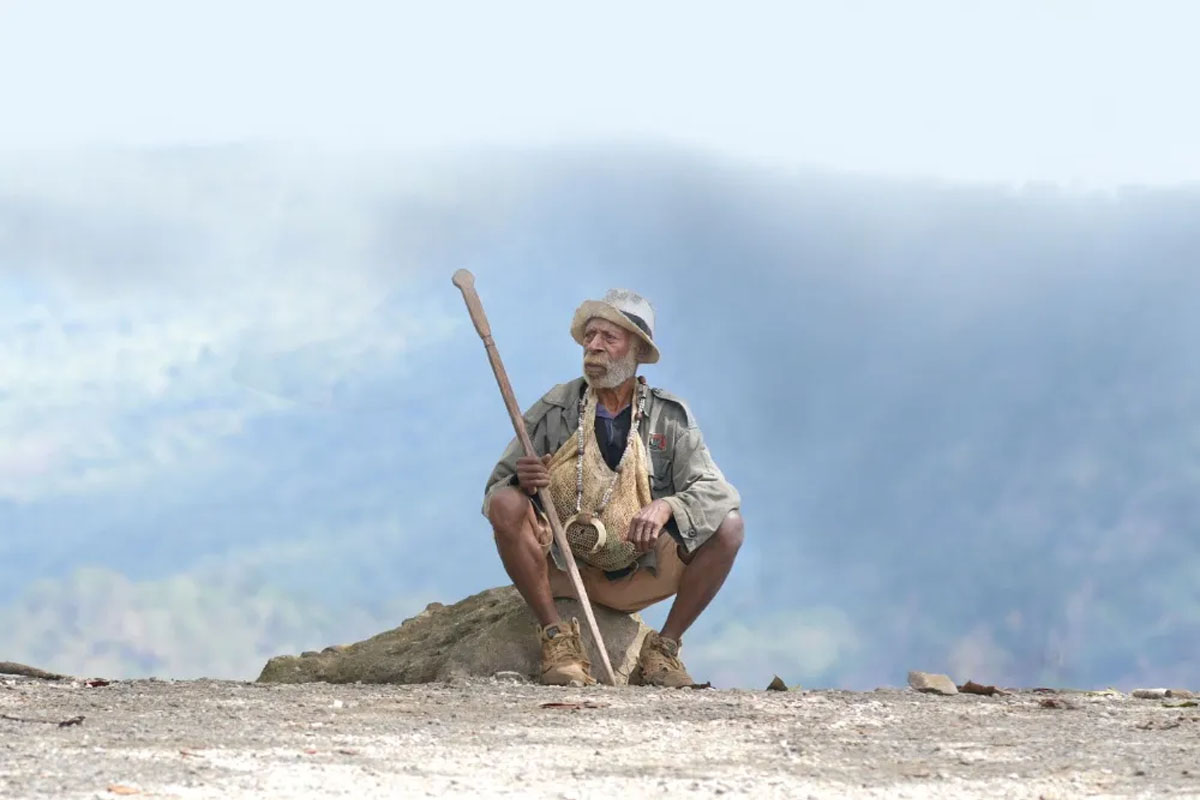
Photo Credit:Neelam Productions/Silicon Media
Papua New Guinea has made history by submitting its first-ever entry to theAcademy Awards. The Pacific nation has chosen Papa Buka as its official contenderfor the international feature film category at the 98 th Oscars in 2026.
Directed by internationally acclaimed Indian filmmaker Bijukumar Damodaran—bestknown for his Shanghai award-winning Trees Under the Sun—Papa Buka is apoignant narrative that bridges cultures, histories, and generations. The film followsthe journey of Papa Buka, an aging war veteran, who guides two Indian historiansuncovering untold World War II stories that reveal a deep connection between Indiaand Papua New Guineathrough shared sacrifice and humanity.
The selection carries extra significance as it coincides with Papua New Guinea’s 50 thyear of independence, a milestone that adds symbolic weight to the nation’scinematic debut on the world stage. The announcement was made by Papua NewGuinea’s Minister for Tourism, Art and Culture, Belden Norman Namah, alongsideNational Cultural Commission executive director Steven Enomb Kilanda and PNGOscar selection committee chair Don Niles.
“This is a historic moment for Papua New Guinea cinema,” Niles said. “Papa Bukaembodies our stories, our traditions, and our artistic voice, and we are proud topresent it to the world through the Academy Awards platform.”
For Damodaran, the recognition underscores both personal and cultural resonance.“This film is a tribute to the shared histories between India and Papua New Guinea, and a symbol of cultural resilience and cross-border collaboration,” he said. “To be the first Oscar submission from PNG, during their 50 th independence year, is a humbling honor.”
The Papua New Guinea-India co-production is powered by an international team of producers: Noelene Taula Wunum of NAFA Productions, Akshaykumar Parija of Akshay Parija Productions, Pa Ranjith of Neelam Productions, and Prakash Bare of Silicon Media.
Leading the ensemble is 85-year-old tribal leader Sine Boboro from Papua New Guinea, joined by Indian actors Ritabhari Chakraborty and Prakash Bare. The cast also includes John Sike, Barbara Anatu, Jacob Oburi, Sandra Dauma, and Max Maso PPC. The production’s technical depth is equally striking, with three-timeGrammy winner Ricky Kej composing the score, cinematography by Yedhu Radhakrishnan, and a screenplay co-written with Daniel Jonerdhagtt.
Beyond its artistic merit, Papa Buka doubled as a cultural capacity-building project. According to producer Wunum, more than 40 university students worked alongside the international crew in roles spanning direction, cinematography, sound, and art direction. With over 60% of the crew being women, the film became a rare model of inclusion and empowerment in filmmaking.
The film will premiere theatrically in Papua New Guinea on September 19, 2025, before heading to international festivals and launching an Oscar campaign in Los Angeles.
Producer Akshaykumar Parija expressed his pride: “I feel extremely privileged to be part of the remarkable film Papa Buka, directed by multiple Indian National Award- winning filmmaker Bijukumar Damodaran. We are deeply grateful to the government of Papua New Guinea, my fellow producers, and the entire cast and crew for their dedication and hard work.”
Producer Pa Ranjith called the milestone “a recognition of the passion and creativityof its storytellers,” while actor-producer Prakash Bare emphasized the film’s cultural bridge: “To have this film recognized as Papua New Guinea’s first-ever Oscar entry makes the journey even more meaningful.”
Composer Ricky Kej, who also serves as a United Nations Goodwill Ambassador, highlighted the universal appeal of the story. “This powerful film beautifully weaves together the shared histories of India and Papua New Guinea, and I hope its universal message of unity, oneness, and preservation resonates deeply with Academy members worldwide.”
With Papa Buka, Papua New Guinea not only enters the Oscars for the first time but also places itself firmly on the global cinematic map, using film as a powerful medium of storytelling, connection, and cultural pride.
