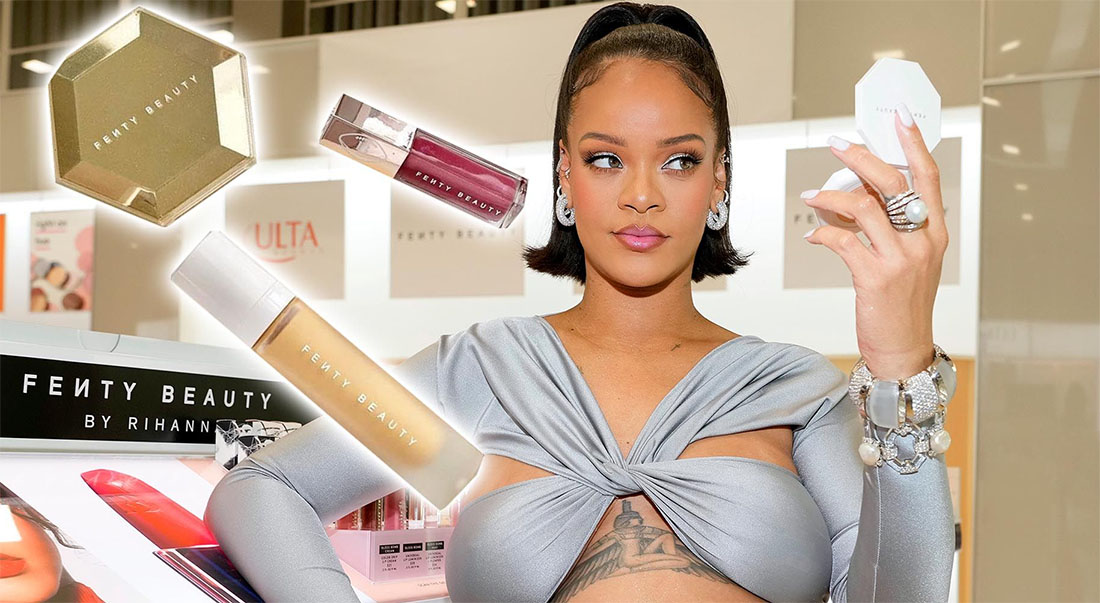
Photo Credit: Getty Images
LVMH is set to sell its 50% stake in Fenty Beauty, the brand founded together with Rihanna in 2017. This decision aligns perfectly with the new strategic priorities implemented by the group led by Bernard Arnault, at a time when the high-end beauty market is experiencing a phase of maturity and saturation.
According to sources from Reuters, the sale will be assisted by the investment bank Evercore, which has already begun searching for potential buyers. Meanwhile, LVMH has not issued official statements, but the rationale behind the choice is clear. In a context of slowed growth, with a 4% decline in revenue in the first nine months of 2025, the group prefers to focus only on assets that strengthen its core holdings such as Dior and Sephora.
When Fenty Beauty launched in September 2017, it was a seismic shift in the world of luxury makeup. Rihanna, in collaboration with Kendo Brands (LVMH’s incubator for new cosmetic projects), launched a foundation range in 40 shades, redefining the very idea of inclusivity in beauty. It wasn’t just a product line, but a cultural manifesto. In its first year, the brand generated over $550 million in revenue, with an estimated valuation of $2.8 billion.
For many, it represented the future model: a global brand, digital, progressive, backed by a celebrity with an authentic voice. But as happens with many charisma-driven revolutions, the fire eventually dimmed. Between 2023 and 2025, Fenty Beauty’s sales began to slow, particularly in North America. Not because the products declined in quality, but because the narrative ran its course. Rihanna remained an icon, but ceased to be the brand’s daily storyteller.
For LVMH, beauty revolves around two poles: Dior as the creative and productive pillar, and Sephora as the global distribution infrastructure. Everything that does not strengthen one of these two assets is considered peripheral. Fenty Beauty, while representing a cultural milestone, is not integrated into this architecture.
The group had already applied the same logic to Kendo, which gave rise to brands like Marc Jacobs Beauty, Bite Beauty, and Kat Von D Beauty. Over time, all were closed or sold. The reasoning is always the same: they do not generate strategic leverage. Fenty, therefore, is not being sold because it is underperforming, but because it is no longer essential. A brand can be profitable and, at the same time, not be "core."
